

Insights
How OTA dependency affects hotel profitability
Online travel agents bring volume but cost margin. A clear look at channel mix, direct bookings and why revenue is not profit.
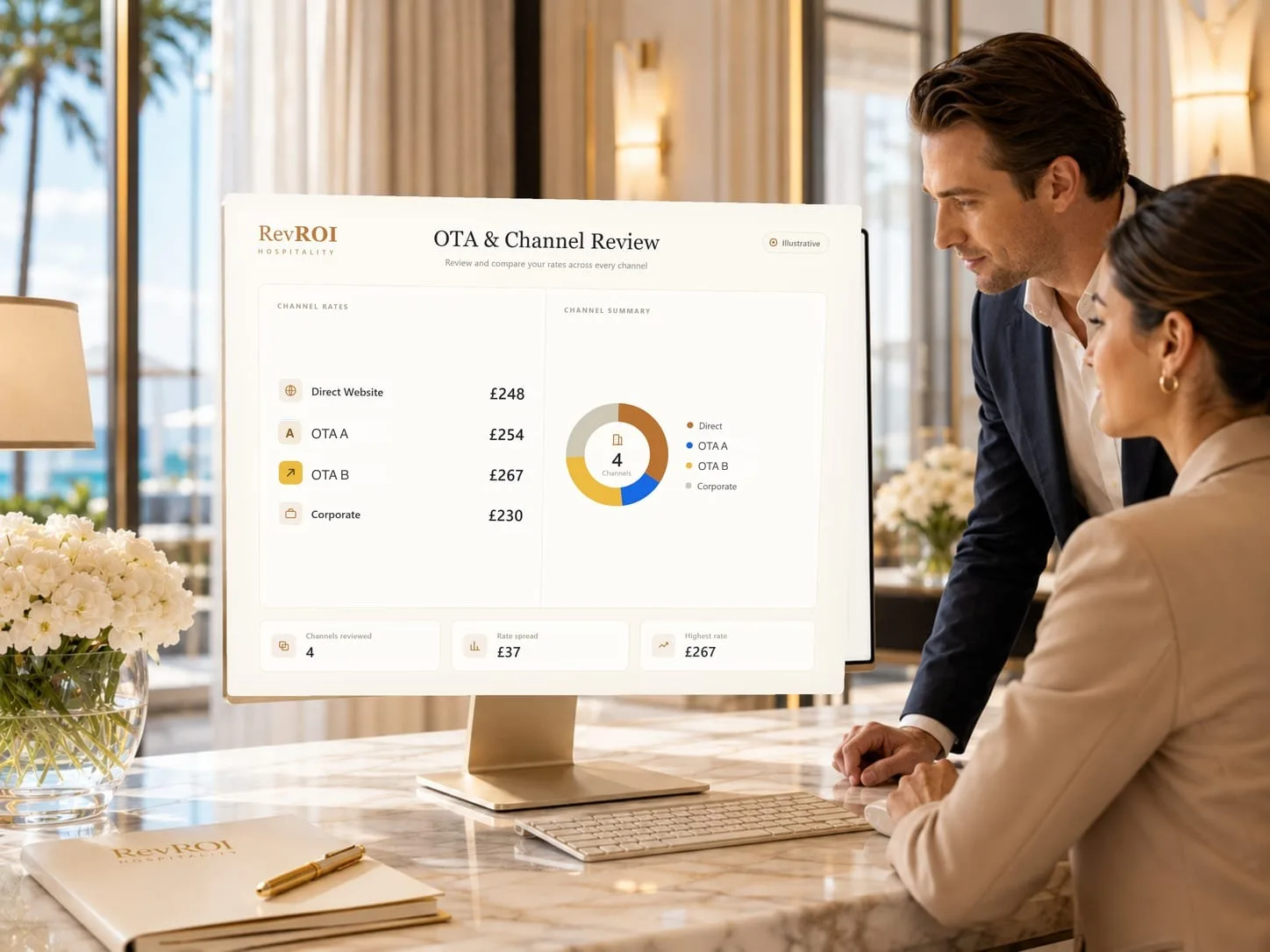
Few relationships in hospitality are as misunderstood as the one between a hotel and the online travel agents that fill its rooms. Platforms such as Booking.com, Expedia and Agoda put a property in front of a global audience overnight, smoothing demand, softening seasonality and reaching guests no individual hotel could find alone. That reach is genuinely valuable. Yet the same channels that deliver volume also quietly shape a hotel’s economics, its margins and, over time, its relationship with the very guests it works so hard to win. Understanding that trade-off is the first step towards a healthier, more profitable distribution mix.
The visibility that comes at a cost
There is no question that the major platforms work. They invest enormous sums in marketing, technology and brand trust, and they pass a slice of that machinery to every hotel listed with them. For a property without the budget or the team to compete for attention online, that is a meaningful service.
The cost of that service, however, is commission, and commission is taken from the top line before any of the hotel’s own expenses are met. A booking that looks healthy at the headline rate can be considerably thinner once the platform’s cut, payment fees and any rate concessions are accounted for. The reach is real, but so is the erosion, and the two need to be weighed against each other rather than assumed to cancel out.
There is a second, subtler cost. When a guest books through a third party, the relationship often belongs to the platform rather than the hotel. Contact details, preferences and the chance to begin a direct conversation can all sit one step removed. Over many stays, that distance makes it harder to encourage repeat visits, to tailor an offer or to build the loyalty that underpins long-term value.
Revenue is not the same as profit
It is easy to celebrate a strong occupancy figure or a record month of bookings. Both are worth knowing. Neither tells you whether the business is actually better off. Revenue measures what comes in; profit measures what remains after the cost of earning it.
A room sold through a high-commission channel, at a discounted rate, with a flexible cancellation policy, may contribute far less than a slightly cheaper-looking direct booking that carries none of those deductions. When distribution is viewed only through the lens of volume, this distinction disappears, and a hotel can grow busier while becoming no more profitable.
A more useful question to ask of every channel is simple:
- What does this booking cost us to acquire, all in?
- What is the net contribution once commission, fees and concessions are removed?
- Does this guest have any likelihood of returning, and through which channel?
Answered honestly across the full mix, these questions tend to reframe the conversation away from “how many rooms” and towards “how much value”.
A healthy channel mix, not an absence of OTAs
The goal is rarely to abandon the platforms. For most independent and mid-market hotels that would be both impractical and unwise. The platforms remain an efficient way to capture demand a hotel cannot reach on its own, to fill the shoulders of the season and to test new markets.
The goal is balance. A hotel overly reliant on a single source of business is exposed to changes in that source’s algorithm, commercial terms or commission structure, with little leverage to respond. A more even spread, with a meaningful and growing share of direct bookings alongside the platforms, gives a property both stability and negotiating room. Direct business tends to carry lower acquisition costs, keeps the guest relationship in-house and offers far more freedom to shape the experience.
Rate parity sits at the centre of this. Guests increasingly compare a hotel’s own website against the platforms before they book, and if the direct channel looks no better, there is little reason to choose it. Parity considerations and platform terms can be intricate, but the principle holds: the direct channel must give the guest a clear, fair reason to book there, whether through the rate, the conditions or the added value around the stay.
Practical steps towards rebalancing
Rebalancing distribution is a deliberate, measured process rather than a single decision. A few practical moves tend to make the most difference:
- Measure net contribution by channel. Look beyond gross revenue to what each channel actually leaves behind once every cost is removed.
- Strengthen the direct path. A fast, trustworthy booking experience on the hotel’s own site, with clear value, gives guests a genuine reason to come direct.
- Make the most of platform-acquired guests. Where terms allow, turn a first stay sourced through a platform into a direct relationship for the next one.
- Review terms and positioning periodically. Commission levels, visibility and parity arrangements are worth revisiting rather than leaving on autopilot.
- Protect, don’t slash. The aim is a stronger mix over time, not a sudden withdrawal that sacrifices the volume the business still needs.
Approached this way, the platforms become one well-understood part of a broader strategy rather than the strategy itself.
Where this leaves the profitable hotel
OTA dependency is not a failing to be ashamed of; it is a natural consequence of how modern travel is booked. The hotels that thrive are simply the ones that see the trade-off clearly, measure it honestly and shift the balance towards channels that protect both margin and the guest relationship. Done with care, this can support a healthier profit profile, with the scale of any improvement always subject to a hotel’s data, its market and how the changes are implemented.
If you would value an objective view of your current channel mix—and accountable support to act on it—discuss the Growth partnership. The commercial baseline is included in onboarding.
The figures and ranges in this article are illustrative. Actual results depend on each property’s data, market conditions and implementation. The best way to understand your own opportunity is a senior conversation about the partnership depth your property needs.